Dinosaur Records
Home page
Dinosaurs and the Bible
The time of the dinosaurs
The great extinction
Records and pictures
Dinosaur gallery
Articles
Contact page
LONGEST
The longest dinosaurs were the diplodocids (click on Dinosaur Gallery for picture). Diplodocids were relatively slender sauropods with very long necks and tails. Supersaurus reached a length of 138 feet. A recent, unnamed diplodocid (unofficially known as the Rio Negro giant) found in the Patagonia region of Argentina appears to be even longer, with an estimated length between 157 and 167 feet. Based on a neural arch found in 1877, Amphicoelias may have reached a length of nearly 200 feet.
The longest dinosaurs were the diplodocids (click on Dinosaur Gallery for picture). Diplodocids were relatively slender sauropods with very long necks and tails. Supersaurus reached a length of 138 feet. A recent, unnamed diplodocid (unofficially known as the Rio Negro giant) found in the Patagonia region of Argentina appears to be even longer, with an estimated length between 157 and 167 feet. Based on a neural arch found in 1877, Amphicoelias may have reached a length of nearly 200 feet.
HEAVIEST
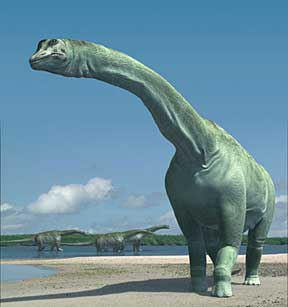
The heaviest dinosaurs were the titanosaurids (see picture below). Titanosaurids had shorter necks and tails than diplodocids but were more massively built. Argentinosaurus, an immense titanosaurid, reached 110 to 130 feet in length and weighed 90 to 110 tons.
The heaviest dinosaurs were the titanosaurids (see picture below). Titanosaurids had shorter necks and tails than diplodocids but were more massively built. Argentinosaurus, an immense titanosaurid, reached 110 to 130 feet in length and weighed 90 to 110 tons.
TALLEST
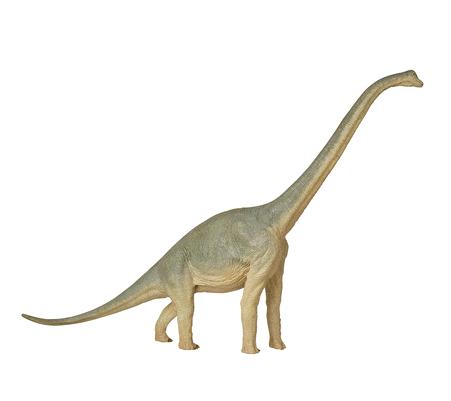
The tallest dinosaurs were the brachiosaurids (see picture below). They had very long necks and relatively short tails, and were unusual in that their forelegs were longer than their back legs, adding considerably to their total height. Sauroposeidon reached a height of 60 feet and weighed 60 tons. It could have looked over the top of a six story building
The tallest dinosaurs were the brachiosaurids (see picture below). They had very long necks and relatively short tails, and were unusual in that their forelegs were longer than their back legs, adding considerably to their total height. Sauroposeidon reached a height of 60 feet and weighed 60 tons. It could have looked over the top of a six story building
LARGEST CARNIVORE
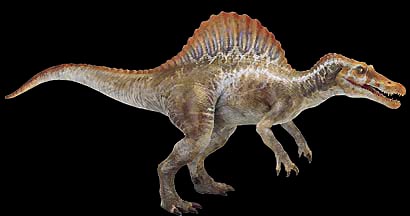
For nearly a century Tyrannosaurus rex (click on Dinosaur Gallery for picture) was believed to be the largest carnivorous dinosaur that ever lived. Since 1993, several carnivorous dinosaurs have been discovered that are bigger than T. rex. Spinosaurus (see picture below) was probably the largest meat-eating dinosaur of all. A piece of jawbone, recently discovered, suggests that this huge beast was sixty feet long with an six-foot skull.
For nearly a century Tyrannosaurus rex (click on Dinosaur Gallery for picture) was believed to be the largest carnivorous dinosaur that ever lived. Since 1993, several carnivorous dinosaurs have been discovered that are bigger than T. rex. Spinosaurus (see picture below) was probably the largest meat-eating dinosaur of all. A piece of jawbone, recently discovered, suggests that this huge beast was sixty feet long with an six-foot skull.
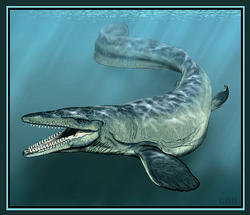
Although technically not a dinosaur, Mosasaurus (see picture below) also reached 60 feet in length. This terrifying sea dragon had a massive skull over six feet long with huge, sharp teeth and a voracious appetite, eating anything it could catch. Mosasaurus is an excellent candidate for the leviathan of Job 41.
Shastasaurus reached a length of 69 feet, but this giant ichthyosaur had no teeth and may have been a filter feeder that lived on plankton and other small marine organisms.
Shastasaurus reached a length of 69 feet, but this giant ichthyosaur had no teeth and may have been a filter feeder that lived on plankton and other small marine organisms.
SMALLEST
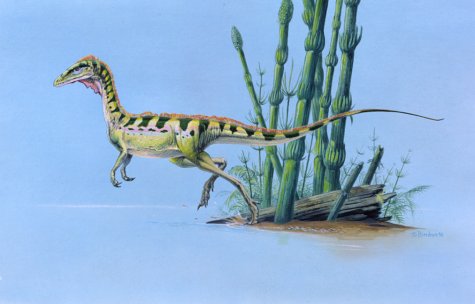
The smallest adult dinosaur ever discovered is Compsognathus (see picture below). This theropod reached two feet in length, much of which was its relatively long tail and weighed less than some chickens.
The smallest adult dinosaur ever discovered is Compsognathus (see picture below). This theropod reached two feet in length, much of which was its relatively long tail and weighed less than some chickens.
FASTEST
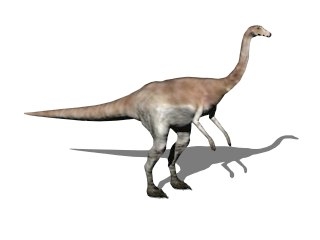
The fastest dinosaurs were the ornithomimids (see picture below). Dinosaur speeds are estimated from fossilized track ways and dinosaur morphology (shape and structure). Dromiceiomimus, Ornithomimus, and Gallimimus were built much like ostriches with toothless beaks, long legs, and hollow bones. They probably had speeds comparable to an ostrich, which can run 45 mph. Dromaeosaurids (raptors) were probably almost as fast for short distances, but lacked the ornithomimids endurance.
Though marine animals and not dinosaurs, some of the ichthyosaurs may have been even faster. Eurhinosaurus, a very unusual ichthyosaur, was very streamlined with an upper jaw elongated into a spear much like that of a billfish (swordfish, marlin, sailfish), which it resembles. Since members of the billfish family are the fastest of all marine animals, having been timed at speeds up to 70 mph, Eurhinosaurus could probably have reached similar speeds. Its high speed, combined with large size (25 to 30 feet), and a sharp bill would have made it a fearsome predator indeed.
The fastest dinosaurs were the ornithomimids (see picture below). Dinosaur speeds are estimated from fossilized track ways and dinosaur morphology (shape and structure). Dromiceiomimus, Ornithomimus, and Gallimimus were built much like ostriches with toothless beaks, long legs, and hollow bones. They probably had speeds comparable to an ostrich, which can run 45 mph. Dromaeosaurids (raptors) were probably almost as fast for short distances, but lacked the ornithomimids endurance.
Though marine animals and not dinosaurs, some of the ichthyosaurs may have been even faster. Eurhinosaurus, a very unusual ichthyosaur, was very streamlined with an upper jaw elongated into a spear much like that of a billfish (swordfish, marlin, sailfish), which it resembles. Since members of the billfish family are the fastest of all marine animals, having been timed at speeds up to 70 mph, Eurhinosaurus could probably have reached similar speeds. Its high speed, combined with large size (25 to 30 feet), and a sharp bill would have made it a fearsome predator indeed.
BEST-ARMORED
The best-armored dinosaurs were the ankylosaurids (see picture below). These herbivores had heavy, armor plates covering their backs and sides, rows of spikes along the sides of their bodies, horns that projected from the backs of their heads, and a bony club on the end of their tails. They even had bony plates protecting their eyes. They were up to 30 feet long and weighed up to six tons. They were probably almost invulnerable to attack from predators.
The best-armored dinosaurs were the ankylosaurids (see picture below). These herbivores had heavy, armor plates covering their backs and sides, rows of spikes along the sides of their bodies, horns that projected from the backs of their heads, and a bony club on the end of their tails. They even had bony plates protecting their eyes. They were up to 30 feet long and weighed up to six tons. They were probably almost invulnerable to attack from predators.
LARGEST SKULL
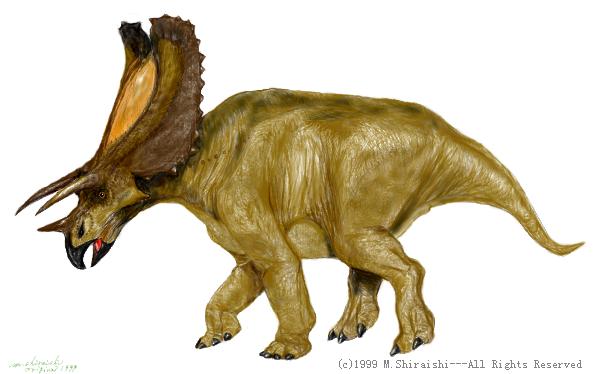
Pentaceratops (see picture below) had largest skull of any dinosaur. The total skull's length from the end of the animal's nose to the back edge of its bony frill was 9.8 feet.
Torosaurus, a long-frilled ceratopsian, and Triceratops (click on Dinosaur Gallery for picture), a massive, short-frilled ceratopsian, both had skulls reaching a length of around nine feet.
Pentaceratops (see picture below) had largest skull of any dinosaur. The total skull's length from the end of the animal's nose to the back edge of its bony frill was 9.8 feet.
Torosaurus, a long-frilled ceratopsian, and Triceratops (click on Dinosaur Gallery for picture), a massive, short-frilled ceratopsian, both had skulls reaching a length of around nine feet.
MOST TEETH
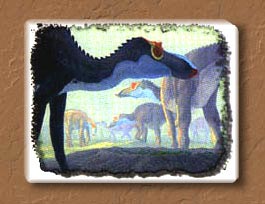
The plant-eating hadrosaurs or duck-billed dinosaurs (see picture below) had by far the greatest number of teeth - about 960 cheek teeth.
The plant-eating hadrosaurs or duck-billed dinosaurs (see picture below) had by far the greatest number of teeth - about 960 cheek teeth.
LONGEST NECK
The longest neck may have been that of Amphicoelius, a huge diplodocid. Its neck has been estimated at 55 feet.
The brachiosaurid, Sauroposeidon, had a 40 foot neck and the diplodocids; Seismosaurus, Supersaurus and Mamenchisaurus also had necks approaching 40 feet.
LARGEST EGGS
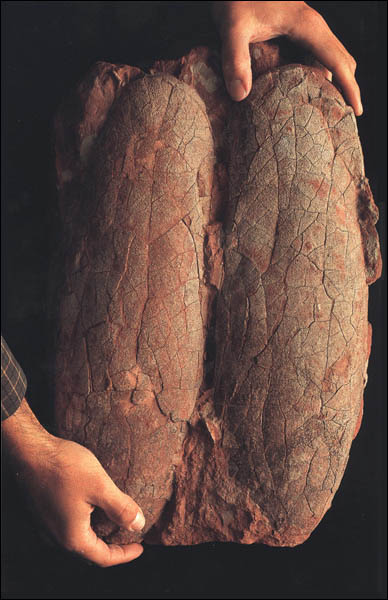
The largest eggs are those of the sauropods (see picture below). Though not many sauropod eggs have been found, Hypselosaurus, a medium-sized sauropod, had eggs a foot long with a liquid capacity of six pints. Recent sauropod eggs of an uncertain species, foung near Tongyong City, Korea, are even larger, measuring 16 inches in length.
The longest neck may have been that of Amphicoelius, a huge diplodocid. Its neck has been estimated at 55 feet.
The brachiosaurid, Sauroposeidon, had a 40 foot neck and the diplodocids; Seismosaurus, Supersaurus and Mamenchisaurus also had necks approaching 40 feet.
LARGEST EGGS
The largest eggs are those of the sauropods (see picture below). Though not many sauropod eggs have been found, Hypselosaurus, a medium-sized sauropod, had eggs a foot long with a liquid capacity of six pints. Recent sauropod eggs of an uncertain species, foung near Tongyong City, Korea, are even larger, measuring 16 inches in length.